AI Strategy
How to Get Your Site Suggested in AI Chat: A Research-Backed Guide to Brand Recognition in ChatGPT, Claude, and Perplexity
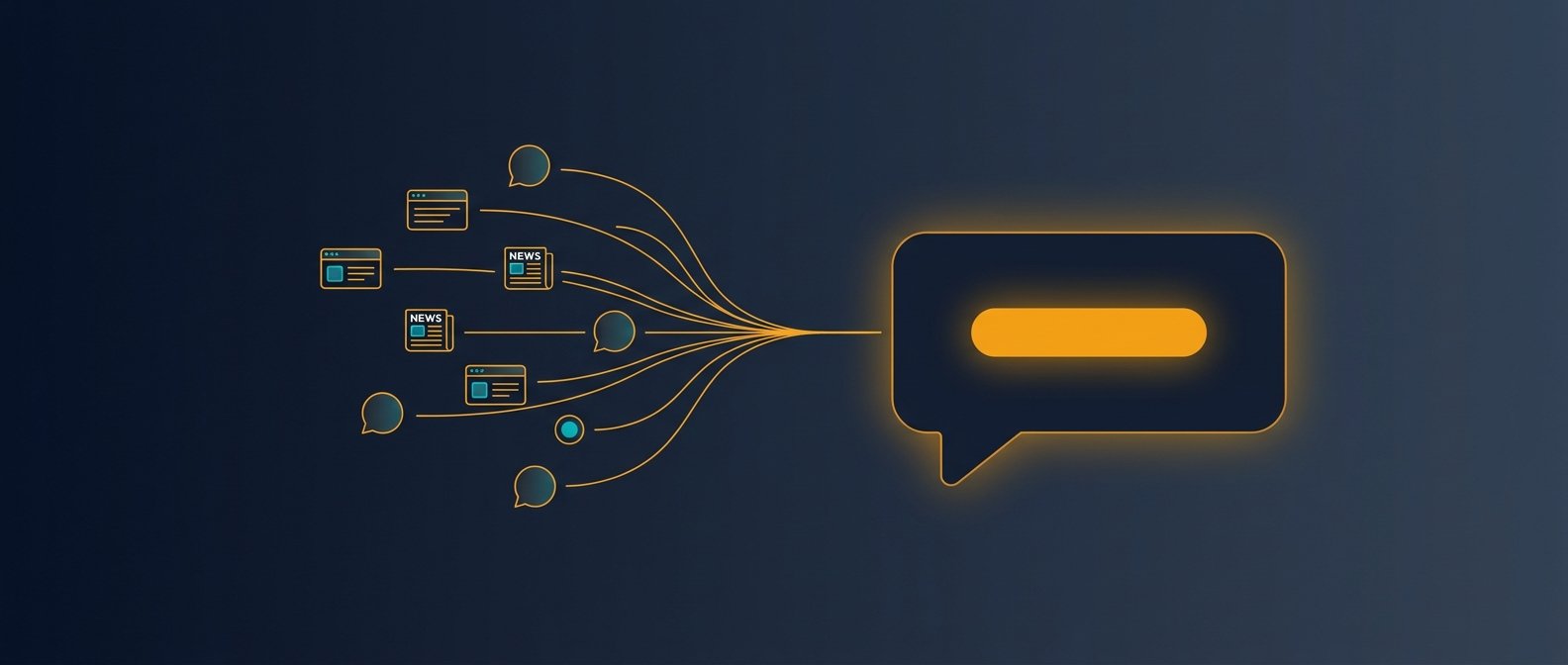
Getting suggested in AI chat is fundamentally different from getting cited as a source. When someone chats with ChatGPT, Claude, or Perplexity, the AI either suggests your brand from memory (because it already knows you from training data) or it searches the web (because you are unknown). On ChatGPT, entity injection (where the model pre-selects brand names from training-data memory and then verifies them via search) makes up 32% of fan-out behavior on average and as much as 44.8% on smaller model tiers. Across our position-controlled analysis of 100,411 AI citation events from 2,000 queries on 4 platforms, the share of brand citations going to a brand's own website is only 4 to 9% by platform. The remaining 91 to 96% comes from third-party coverage. The lever for getting suggested is not your website. It is everything that points to your website.
This guide is grounded in our published research program. "The SEO Floor" (n=100,411 citation events across 4 platforms × 2,000 queries) maps how AI citations distribute across Google rank tiers and which content features predict citation. "How AI Platforms Search" (n=1,323 fan-out queries across ChatGPT, Gemini, and Perplexity) characterizes the two-layer retrieval model and per-platform fan-out personalities. "Reddit Doesn't Get Cited (Through the API)" documents the access-channel divergence that controls where Reddit content shows up. "I Rank on Page 1" (n=10,293 pages × 250 queries) isolates the page-level features that predict citation within a Google position band.
The headline takeaway: ranking in LLMs and getting suggested in AI chat are two related but distinct problems. Ranking is about being one of the few sources cited inline next to a written answer. Getting suggested is about your brand name being the answer. We covered the citation side in How to Rank in LLMs. This guide covers the brand side.
What does it mean to be "suggested" in AI chat?
Being suggested in AI chat means an AI assistant names your brand or recommends your site when a user asks an open-ended question. "What is the best CRM for a small SaaS team?" "Where should I read about generative engine optimization?" "What tool tracks AI citations?" Each of those is a recommendation prompt. The AI returns a short list of brand names. You either appear on the list or you do not.
This is a different surface from being cited as a source. Citation is when the AI quotes a specific page and links to it inline. Recommendation is when the AI says "consider Salesforce, HubSpot, and Pipedrive" and you are one of the three names on the list. You can be cited as a source without being recommended (e.g., your blog post is cited for a definition but your product is not on the recommended list). You can also be recommended without being cited (e.g., the AI names your brand from memory but does not link to your site).
For most B2B and consumer brands, recommendation is the higher-revenue surface. A user who asks "What is the best AI visibility tracker?" and gets your name as recommendation #1 is much closer to a buying decision than a user who reads a definitional article that happens to cite your blog. Recommendation is the moment of brand discovery.
The four major AI chat platforms (ChatGPT, Claude, Perplexity, Google AI Mode) handle recommendation differently. Some pull brands from training-data memory without searching. Some search the live web every time. Most do a mix, and the mix shifts depending on the model tier and the query type. The next sections break down how each one decides.
How is being suggested different from being cited as a source?
The mechanical difference comes down to two things: where the brand name comes from and whether the AI links to a source.
When AI cites a source, it links to a specific URL. Citation requires the AI to have indexed or fetched that URL. The page either ranks well in the underlying search index (Bing for ChatGPT, Perplexity's own index for Perplexity, Google's index for AI Mode) or it gets fetched on demand.
When AI suggests a brand, the brand name can come from two places. First, it can come from training data: the AI has seen the brand mentioned thousands of times during training, so it can recall the name without searching. Second, it can come from search: the AI runs a query, retrieves results, and lists the brands appearing in those results.
The two paths produce very different visibility outcomes. Brands that the AI knows from training data get suggested without any live search happening. They appear instantly. Brands that the AI does not know require a search every time, and the AI is constrained by what its search engine returns.
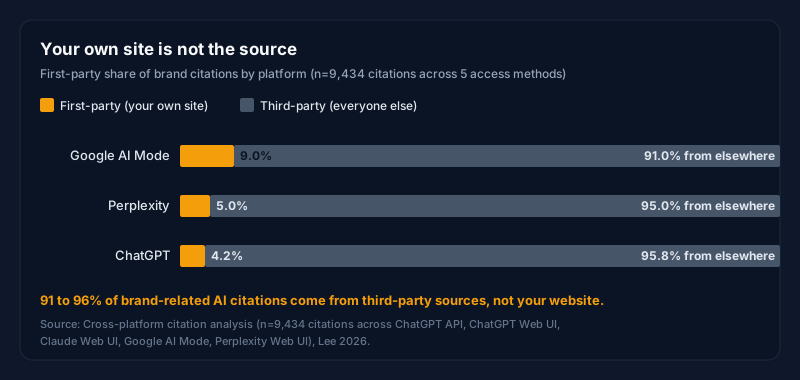
Across our cross-platform analysis, the first-party citation rate (the rate at which brands are cited via their own website) is low: 4.2% on ChatGPT, 5.0% on Perplexity, 9.0% on Google AI Mode. That means 91 to 96% of brand-related citations come from somewhere other than your own site. The same data shows up for brand mentions that are not citations: most of the brand-name surface in AI chat comes from third-party signals.
For the empirical breakdown of first-party vs third-party, see First-Party vs Third-Party AI Citations.
How does AI chat decide which brands to suggest? (the two-path retrieval model)
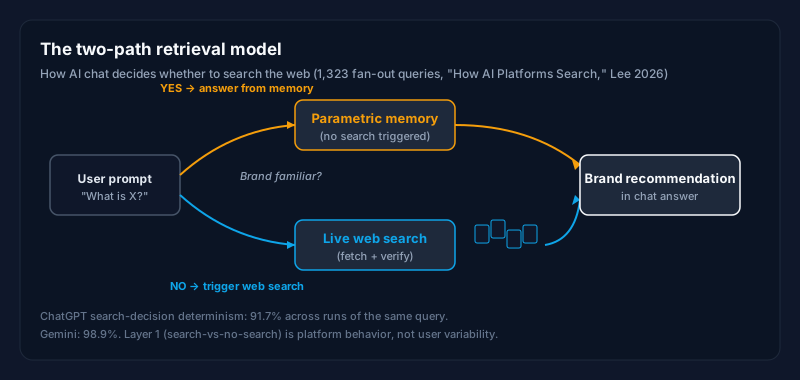
When you send a prompt to an AI chat, the AI runs an internal decision: should I answer from what I already know, or should I search the web? Our research finds the answer is highly deterministic at the platform level. In "How AI Platforms Search", we measured search-decision determinism across 1,323 fan-out queries: Gemini decides to search 98.9% of the time across runs of the same query, ChatGPT 91.7% of the time. The search-vs-no-search decision is mostly platform behavior, not user variability.
A small exploratory study on gpt-5-mini (12 paired prompts, OpenAI Responses API, January 2026) illustrates the brand-familiarity pattern that drives the no-search path. We asked structurally identical questions about brands of different familiarity:
| Prompt | Searches triggered | Sources cited |
|---|---|---|
| "What is Salesforce?" | 0 | 0 (answered from training data) |
| "What is Strique?" | 2 | 9 (brand unknown, must search) |
(Pattern confirmed across 3 of 3 test pairs in the exploratory study; consistent with the larger fan-out paper. Well-known brands like Salesforce, HubSpot, and Slack do not trigger search; obscure brands like Strique, Folk CRM, and Pumble always do.)
The two-path retrieval model is binary. If ChatGPT recognizes your brand from training data, it does not search. It pulls the answer from parametric memory. If it does not recognize your brand, it always searches.
The implication for brand visibility: established brands get answered from memory and may receive outdated training-data information. Emerging brands always trigger a live search, which means the AI will always read your current website. This is a meaningful advantage for brands that are not yet well known. The AI will discover whatever you have published most recently.
The two paths show up at scale across platform fan-out behavior. Each AI platform decomposes a user prompt into internal sub-queries before answering. The composition of those sub-queries is different by platform:
| Platform | Dominant fan-out type | Share | What it means |
|---|---|---|---|
| ChatGPT | Entity Injection | 32% (composite) | Pre-selects brands from training data, verifies them via search |
| Gemini | Expansion | 27% | Wide-net explorer, searches for context and adjacent topics |
| Perplexity | Evidence Seeking | 21% | Searches for proof, reviews, structured data |
(Source: Lee 2026, "How AI Platforms Search", n=1,323 fan-out queries. Chi-squared p < 0.001, Cramer's V = 0.38, indicating real and substantial differences across platforms.)
ChatGPT's behavior shifts further by model tier. The smaller, faster models lean even harder on entity injection:
| Model | Entity injection rate | Search trigger rate |
|---|---|---|
| gpt-5.4-nano | 44.8% | 100% |
| gpt-5.4-mini | 16.8% | 100% |
| gpt-5.4 (flagship) | 25.0% | 29% |
The flagship model triggers a search only 29% of the time. It is the most likely to answer purely from training data. The smaller models always search but lean heavily on injecting brand names from memory before doing the search.
For the full fan-out taxonomy, see The Hidden Search Queries AI Runs Before It Answers You.
What is entity injection and why does it matter?
Entity injection is the term we use for the retrieval pattern where AI chat platforms pre-select brand names from training-data memory and then run a search to verify or supplement them. It is the dominant retrieval behavior on ChatGPT (32% composite across model tiers, peaking at 44.8% on the smallest tier gpt-5.4-nano).
Practically, entity injection works like this. A user asks "What are the best email marketing tools?" Before searching, ChatGPT internally generates a list of brand names from training-data memory: Mailchimp, Klaviyo, ActiveCampaign, etc. Then it searches the web for those specific brand names to gather supporting context. The search results are biased toward the brands ChatGPT already had in mind.
This means the AI has already decided which brands to consider before the search ever happens. Brands absent from ChatGPT's training-data brand map are structurally excluded from the entity-injection retrieval path. The search step looks like neutral information gathering, but it is gathering information about pre-selected entities.
The top entities ChatGPT injects into commercial queries skew heavily toward platforms, marketplaces, and industry-directory brands. In our analysis, the most-frequently-injected names included:
- Amazon (marketplace, very high training-data frequency)
- SkinCeuticals, COSRX (consumer skincare brands with massive review coverage)
- Clutch, Newswire (B2B service-directory and PR platforms)
- "GEO," "ChatGPT" (industry self-reference)
The pattern is consistent. ChatGPT injects brands that received heavy coverage on category-directory sites, review aggregators, and PR wires. Brands that built strong third-party coverage during training-data window are baked into the parametric memory of every model trained from that data.
The practical implication is that being in ChatGPT's training-data brand map is worth more than being a high-quality but unknown specialist. Earned coverage on high-authority category-directory sites (Forbes, G2, Clutch, category-specific review aggregators) is the mechanism for getting into that map. Once you are in, you are recommended without a search. Once you are not, you require the AI to search and find you, which is dramatically more difficult.
For the deeper analysis of how ChatGPT discovers and verifies brands, see How ChatGPT Researches Your Brand.
Why do most AI brand mentions come from third-party sites?
Across our cross-platform analysis, the first-party citation rate (the rate at which a brand is cited via its own website) is consistently low.
| Platform | First-party citation rate |
|---|---|
| Google AI Mode | 9.0% |
| Perplexity | 5.0% |
| ChatGPT | 4.2% |
(Source: Cross-platform citation analysis (n=9,434 citations across ChatGPT API, ChatGPT Web UI, Claude Web UI, Google AI Mode, and Perplexity Web UI), an internal sub-study supporting "The SEO Floor" and "Reddit Doesn't Get Cited (Through the API)".)
Phrased the other way: 91 to 96% of brand-related citations come from third-party sources. Review sites, news media, comparison guides, Reddit threads, YouTube videos, industry-directory sites, and other people's blogs together make up the dominant share of where AI gets its information about brands.
This pattern is not an accident. It reflects how AI chat systems are trained and how they verify claims. A brand making a claim about itself ("we are the leading platform for X") is treated as biased. Independent third-party coverage is treated as more credible. AI systems trained to follow this convention default to citing third parties even when first-party content is more accurate or up to date.
The breakdown by query type makes the pattern more concrete. Across ChatGPT's behavior on different intent types:
| Query type | Share of all queries | What ChatGPT cites |
|---|---|---|
| Informational ("what is X") | 61.3% | Wikipedia heavily, .gov/.edu, established reference sites |
| Discovery ("best X for Y") | 31.2% | Review aggregators (16 to 21%), listicle media, vendor sites |
| Comparison ("X vs Y") | 2.3% | Publisher/media sites (20%), review aggregators (17%). Brand sites: 0% |
| Validation ("is X worth it") | 3.2% | Brand sites + Reddit (web UI 17%) |
| Review-seeking ("X reviews") | 2.0% | TechRadar, PCMag, Reddit (web UI) |
Note the Comparison row. ChatGPT cites brand sites 0% of the time for head-to-head comparison queries. If a user asks "Is HubSpot or Salesforce better?" and ChatGPT searches, it will pull from publishers, comparison sites, and review aggregators. The brands' own websites are functionally invisible for this query type. This is the structural reason why comparison content on third-party sites is the most valuable real estate in AI search.
Comparison queries also pull a wider source set. ChatGPT pulls 15 to 38 sources per Comparison query (vs. 3 to 8 for typical queries) because the platform tries to gather independent perspectives.
For the deeper data on the third-party effect, see our flagship piece on this topic: 93% of What AI Says About Your Brand Comes From Other Websites.
How does each AI platform handle brand suggestions?
The four major AI chat platforms have different brand-recommendation behaviors. Treating them as one problem will mislead you. Here is what we measured across the platforms our research covers.
ChatGPT is the most predictable platform for brand recommendations. Within-platform recommendation consistency is high: mean Jaccard similarity of 0.619 across repeat runs of the same query, with 70% top-1 consistency. If your brand is recommended #1 by ChatGPT today, there is a 70% probability it will still be recommended #1 if the same query is asked again. ChatGPT is the most neutral platform for brand sentiment (only 13% positive mentions vs 48% for Google AI Mode), and it has the highest variance between brands in the same category (21% mention rate for one, 0% for another in the same category).
Claude is the hardest platform to earn citations from. Citation rate is 39% per query (vs. 97% for Perplexity and 98% for Google AI Mode). Claude frequently answers from its parametric knowledge without citing anything. When Claude does cite, it cites sparingly. Claude also has a 0% Reddit citation rate across both API and web UI. The brands Claude does mention tend to be authoritative reference brands (Wikipedia, .gov/.edu, established industry sources, major media outlets). For full Claude behavior, see Claude Web Fetch Explained.
Perplexity has the lowest brand-recommendation consistency we measured (Jaccard 0.331), meaning the same query asked twice can return very different brand sets. This is the flip side of Perplexity's freshness bias. The platform retrieves and ranks based on the most recent indexed content, which shifts daily. The upside is that Perplexity is the easiest platform to break into. New brands with fresh content and consistent crawling can earn citations within hours.
Google AI Mode has the highest first-party citation rate (9.0%) but draws heavily from earned media and community sources. AI Mode pulls 48% of its citations from Reddit on web-UI queries we tested. YouTube and earned media coverage carry significant weight. AI Mode is also the most positive-leaning platform for brand sentiment (48% positive mentions).
Recommendation-consistency comparison across platforms (within-platform Jaccard similarity for the same query asked 3 times):
| Platform | Mean Jaccard |
|---|---|
| ChatGPT | 0.619 |
| Perplexity | 0.331 |
| Claude | 0.316 |
| Gemini | 0.255 |
(Source: Brand consistency experiment, 50 queries × 3 runs across 4 platforms.)
For ChatGPT specifically, the consistency varies by query type. Entity-anchored queries (e.g., "Is the Dyson Airwrap worth it?") have 80% top-1 consistency and Jaccard 0.557. Generic queries (e.g., "Best vacuum cleaner") have 60% top-1 consistency but higher Jaccard 0.682, meaning the same set of brands appears but the #1 position shifts more. Re-tested 5 weeks later, the original top-1 brand was still present in the recommendation set 65% of the time across the 40 queries we re-ran. Recommendations shift over time, but core brand preferences show moderate persistence.
For our Reddit-specific analysis, see Reddit and AI Search.
What kinds of sites get your brand into AI's "known" map?
Based on the entities ChatGPT actually injects into commercial queries (the brands it has memorized from training data), the most influential third-party site categories cluster into a small number of types. These are the sites that, when they cover you, push your brand into AI's parametric memory.
Category-directory sites. G2, Capterra, Clutch, GoodFirms, ProductHunt, AppSumo. These sites publish curated lists, comparisons, and reviews organized by category. They appear repeatedly in ChatGPT's training-data brand map. A page on G2's "Best CRM Software" list is one of the strongest single brand signals you can earn.
Major business publications. Forbes, Inc., Fast Company, TechCrunch, Wired, Business Insider, The Verge, Bloomberg. Coverage on these sites is heavy in training data and they are frequently cited by ChatGPT for Discovery and Informational queries.
PR wires and press release distributors. Newswire, PR Newswire, BusinessWire. Press release distribution to wire services seeds your brand name across hundreds of secondary outlets, which compounds the training-data signal. The Wellows-style "AI launch" coverage from PR distribution is exactly this pattern.
Vertical-specific publications and review hubs. TechRadar and PCMag for consumer tech, MarTech.org for marketing tech, Search Engine Land and Search Engine Journal for SEO/AI, Healthline for health. Each vertical has its own gravitational pull list of "AI-cited" sources.
Reddit and community platforms. For platforms that draw from Reddit (Perplexity 64%, Google AI Mode 48%, ChatGPT web UI 27%), brand mentions in community discussions count as third-party signal. This is access-channel dependent: the API path returns 0% Reddit on every platform.
YouTube. Google AI Mode pulls 137 of its citations from YouTube in our cross-platform sample, and Perplexity pulls 121. For platforms that use YouTube as a source, video content with your brand mentioned, demonstrated, or reviewed is a citation surface.
Wikipedia and structured-knowledge sources. Wikipedia accounts for 42.9% of citations across platforms for Informational queries. A Wikipedia page about your brand or a Wikipedia page that mentions your brand alongside a category is one of the highest-leverage third-party signals available.
The Wellows (485k citations, 7,785 queries) study found that the top 50 domains accounted for ~48% of all AI citations, while the remaining 52% spread across the long tail. The top 50 are largely the categories above. The long tail is where you start when you are emerging.
For our review-site tier breakdown, see Which Review Sites Do AI Platforms Cite Most?.
How do you build the third-party coverage that makes AI know you?
Once you know which kinds of sites populate AI's known-brand map, the question becomes how to land on them. There are five workstreams that drive third-party brand mentions, ordered by leverage.
1. Category-directory listings. Get listed on the major directory sites for your category. G2, Capterra, Clutch, ProductHunt, etc. This is usually free or self-serve and produces a lasting brand signal. Maintain accurate category placement, fill out the profile completely, accumulate genuine reviews. These sites are frequently re-crawled and feed multiple AI training datasets.
2. Comparison and head-to-head content. Per the data above, ChatGPT cites brand sites 0% for Comparison queries but pulls 15 to 38 sources from third parties. Earn third-party comparison coverage by pitching independent reviewers, contributing to existing comparison guides, getting featured in "X vs Y" articles, and supporting independent benchmark studies. This single workstream is usually the highest-ROI third-party effort for B2B brands.
3. PR and earned media. Newsworthy launches, original research, industry surveys, partnerships, executive quotes in trend pieces. Wire-distribution PR is one of the cheaper ways to seed your brand name across hundreds of secondary outlets at once. Even if the individual stories do not get cited, the volume of brand-name surface area compounds in training data. Original research pieces (your own data, presented as a study) are particularly effective.
4. Expert quotes in industry publications. Pitch your founder or subject-matter experts to journalists writing in your category. Each quote in a major business publication seeds your brand name in training data and creates a direct citation surface for the next AI chat user who asks about your category.
5. Strategic Wikipedia and knowledge-graph presence. Wikipedia accounts for 42.9% of cross-platform citations for Informational queries. If your brand is large enough to warrant a Wikipedia page (you must meet notability requirements), establishing one is high-leverage. For brands not yet at Wikipedia notability, focus on Wikidata entries, Crunchbase, LinkedIn company pages, GitHub organization pages, and any other structured-data source.
For knowledge-graph specifics, see Knowledge Graph and AI Citations.
What role does Reddit play in AI brand suggestions?
Reddit's role in AI chat is platform-dependent and access-method dependent. The variation is significant.
| Platform | Reddit citation rate (Web UI) | Reddit citation rate (API) |
|---|---|---|
| Perplexity | 64% | 0% |
| Google AI Mode | 48% | n/a (no API equivalent) |
| ChatGPT | 27% | 0% |
| Claude | 0% | 0% |
(Source: Cross-platform Reddit citation analysis, 9,434 citations across 5 access methods.)
For the platforms that draw from Reddit (Perplexity, Google AI Mode, ChatGPT web UI), Reddit is one of the largest third-party brand-mention surfaces in AI search. Active brand presence on Reddit (genuine community engagement, not promotional posting) translates to AI brand mentions.
The 0% rate across all API access methods is critical. If your audience uses LLMs through programmatic interfaces (Cursor, custom-built agents, OpenAI API directly, Anthropic API directly), Reddit is invisible to them. The API path bypasses the Reddit-citation pipeline entirely.
Claude does not cite Reddit at all on either path. This is a deliberate design decision by Anthropic. If Claude is a strategic platform for your audience, Reddit is not the lever. Other paths are.
For the full Reddit-and-AI strategy, see Reddit and AI Search: How Reddit Shapes Google Rankings, AI Recommendations, and Brand Perception.
How to optimize your own site to support entity recognition
Even though most brand suggestions come from third-party sources, your own site still has work to do. The job of your site is not to be the primary citation surface (that battle is mostly lost). The job is to support the AI's entity-recognition signal so that when third parties mention your brand, the AI knows what they are talking about.
Five things on your own site move the entity-recognition signal:
1. Organization schema with sameAs links. Implement Organization JSON-LD schema on your homepage and About page, with sameAs pointing to Wikipedia (if you have one), Wikidata, LinkedIn, Crunchbase, X, Facebook, and your other authoritative profiles. Each sameAs link tells the AI "this brand is the same entity as this other authoritative reference." This is the single strongest first-party entity signal available.
2. Person/Author schema with sameAs. For executive bios and author pages, add Person schema with sameAs to LinkedIn, X, ORCID, and any other professional reference. This builds the personal-entity authority that compounds with brand-entity authority.
3. Consistent brand naming across the site. Use the exact same brand string across all pages, footer, navigation, and metadata. Mixed casing or alternative spellings dilute the entity signal. Pick one canonical brand name and use it everywhere.
4. About page with clear category claim. Make sure your About page contains a clear, declarative statement of what you do, who you serve, and what category you are in. This is the page AI most commonly fetches when it needs to verify a brand identity. "X is a Y for Z" structure works.
5. Internal-link consistency to category pages. Link from your blog and content pages to clearly named category landing pages. The internal-link graph reinforces the entity-category association the AI is trying to establish.
For technical implementation specifics, see Technical SEO for AI Citations.
What are common mistakes that keep AI from suggesting your brand?
These five anti-patterns showed up repeatedly in our brand-visibility audits. Each one is a controllable mistake.
1. Relying on your own site to do the work. With first-party citation rates between 4 and 9%, your own site is structurally not the dominant signal. Brands that pour 100% of their content effort into their own blog and 0% into third-party coverage will not get suggested in AI chat regardless of how good the blog is.
2. Ignoring category-directory listings. Many B2B brands skip the G2/Capterra/Clutch tier because the listings feel basic or low-effort. ChatGPT's training-data entity map weights these heavily. Skipping them is leaving the highest-leverage free brand signal on the table.
3. Inconsistent entity signals across the web. Your brand is "Acme Corp" on the website, "Acme" on G2, "Acme, Inc." on LinkedIn, and "ACME" on Crunchbase. The AI tries to merge these but does it imperfectly. Each variant fragments the entity signal. Pick one canonical brand string and enforce it everywhere.
4. Letting competitor content fill your topic gaps. Our research documented a specific failure mode: a query about "Klaviyo deliverability" resulted in ChatGPT citing Moosend (a competitor) because Moosend's deliverability content was more comprehensive and better indexed on Bing. If competitors have more comprehensive third-party coverage for sub-topics adjacent to your brand, ChatGPT may route citations to them even for brand-anchored queries. Audit your category sub-topics and make sure your brand is well-represented (via your own content and via earned third-party coverage) for each one.
5. Skipping PR because "we don't do news." Wire-distribution PR seeds your brand name across hundreds of secondary outlets at once. Even non-newsworthy launches, partnerships, executive announcements, or original research can be wire-distributed. The brand-mention surface area builds training-data signal regardless of whether any individual story is read by humans.
How long does it take before AI starts suggesting your brand?
Time-to-recognition depends on which platform and which retrieval path you are working through.
Perplexity is the fastest. New third-party content covering your brand can show up in Perplexity citations within hours. Perplexity's freshness bias for medium-velocity topics (32.5 days median source age) means recent coverage outranks stale authority. If you publish a study, get covered by a major publication, and that publication's article gets indexed quickly, Perplexity can pick it up the same day.
Google AI Mode is similar to Perplexity for fresh content. YouTube and Reddit signals can flow through quickly. Earned media coverage typically appears within 1 to 2 weeks of publication.
ChatGPT is slower for recognition because of two factors. First, Bing indexing is the bottleneck (typical lag is days to weeks). Second, ChatGPT's training-data brand map only updates when OpenAI retrains or refreshes models. Live search can catch fresh coverage immediately for unknown brands (since unknown brands always trigger search), but the parametric memory only updates on training-data refresh cycles. A new brand that gets heavy third-party coverage today may not be in ChatGPT's training-data brand map until the next major model update, which can be 6 to 12 months out.
Claude has the longest recognition lag of any platform because Anthropic does not appear to do live search by default for known categories, and Claude's citation rate is the lowest of any platform we tested (39%). Claude's training-data brand map updates only when Anthropic releases a new model.
The practical implication: the brands that show up in AI chat today were built by 12 to 24 months of compounding third-party coverage. The brands that will show up in AI chat in 12 months are the ones doing that work now. There is no overnight path to ChatGPT's training-data brand map. There is a same-week path to Perplexity citations and a same-day path to Google AI Mode for fresh news. Plan accordingly.
For consistency analysis on how stable AI citations are over time, see Are AI Citations Random or Can You Consistently Rank?.
Frequently asked questions
How do I get my site recommended by ChatGPT? Build third-party coverage on category-directory sites (G2, Capterra, Clutch), business publications (Forbes, Inc., TechCrunch), and PR wires (Newswire, PR Newswire). ChatGPT pre-selects brands from training-data memory before searching. Brands in that memory get recommended without a search; brands not in it require ChatGPT to discover them via Bing-indexed pages. Both paths matter, but the training-data path is higher leverage.
How do I get my site suggested by Claude? Claude is the hardest platform to earn brand mentions from. Citation rate is 39% per query (vs 97 to 98% for Perplexity and Google AI Mode). Claude prefers authoritative reference content (Wikipedia, .gov/.edu, established industry sources). Earn coverage on those tier-1 sources first.
How do I get suggested by Perplexity? Perplexity rewards freshness and recently indexed content. Publish or refresh content frequently. Get covered by publications that PerplexityBot crawls. Reddit coverage helps significantly (Perplexity has the highest Reddit citation rate at 64%).
How do I get suggested by Google AI Mode? Invest in YouTube content, Reddit presence, and earned media. Google AI Mode draws ~48% of its citations from Reddit on web-UI queries. YouTube videos that feature or review your brand are a major signal. Wire-distributed PR and major publication coverage compound this.
Why is my own website not enough? First-party citation rates are 4.2% on ChatGPT, 5.0% on Perplexity, and 9.0% on Google AI Mode. The remaining 91 to 96% of brand citations come from third parties. AI systems are trained to prefer independent sources for brand claims. Your site should still be excellent (it is the verification layer), but it cannot do all the work alone.
Does it matter whether AI cites my site or just mentions my brand? Both matter, but for different reasons. Brand mentions drive recognition and recall (the user remembers your brand exists). Citations drive trust and click-through (the user reads your content directly). For most B2B and consumer brands, recommendation/mention is the higher-revenue surface.
How do I rank in LLMs without paying for PR or directories? Comparison and review content on third-party sites can be earned without paid PR. Pitch independent reviewers, contribute data to existing comparison guides, share original research with industry publications. Reddit engagement (genuine community participation, not promotional) is free. G2 and Capterra basic listings are free or very low cost. The compounding signal works at any budget; budget just accelerates it.
Does AI know about new brands? Only via search. New brands are not in training-data memory, so AI must search the web to find them. This is actually an advantage if your brand is newly visible: any AI query about your brand triggers live retrieval, which means AI reads your current content. The challenge is being in the index at all (Bing for ChatGPT, Perplexity's index for Perplexity, Google's index for AI Mode).
How is "being suggested" different from "ranking" in LLMs? Being suggested means the AI mentions your brand name in its answer. Ranking means the AI cites a specific page on your site as a source. These are related but distinct surfaces. We covered the ranking side in How to Rank in LLMs. This guide covers the suggestion side.
How do I track whether AI is suggesting my brand? Use an AI visibility tracker that monitors brand mentions and recommendations across ChatGPT, Claude, Perplexity, and Google AI Mode for your target queries. Manual querying works for spot-checks but does not scale. See our breakdown of AI Visibility Trackers.
Want to know if AI is suggesting your brand?
Two ways to check.
For a fast self-serve scan, run our AI Visibility Quick Check. It tells you whether your brand appears in AI-generated answers for your top queries.
For a personal walkthrough of where your brand actually surfaces across ChatGPT, Claude, Perplexity, and Google AI Mode (and which third-party sources are doing the work), request a Free AI Visibility Video Audit. We pull your actual recommendation data and the top-3 third-party sites moving the needle for your category, and we walk you through the 2 to 3 highest-priority brand-coverage gaps on a recorded video. No deck. No sales call. Just the diagnosis.
References
- Lee, A. (2026). "The SEO Floor: Measuring Google Rank Distribution of AI-Cited Pages." Preprint, pre-registered (OSF). 100,411 AI citation events across 4 platforms × 2,000 queries. DOI: 10.5281/zenodo.19787654.
- Lee, A. (2026). "How AI Platforms Search: Two-Layer Retrieval and Cross-Platform Fan-Out Patterns." Preprint v1.3. 1,323 fan-out queries across ChatGPT, Gemini, and Perplexity. DOI: 10.5281/zenodo.19554329.
- Lee, A. (2026). "I Rank on Page 1: What Gets Me Cited by AI?" Preprint v1. 10,293 pages × 250 queries, position-controlled. DOI: 10.5281/zenodo.19398158.
- Lee, A. (2026). "Reddit Doesn't Get Cited (Through the API): Training Data Influence, Access-Channel Divergence, and the Shadow Corpus in AI Brand Recommendations." Preprint v3. Zero Reddit citations via API, 17 to 44% via web UI.
- Lee, A. (2026). "Query Intent, Not Google Rank: What Best Predicts AI Citation Behavior." Preprint v3. 3,251 real websites (UGC excluded) across ChatGPT and Google AI Mode. DOI: 10.5281/zenodo.18653093.
- Internal sub-studies referenced: brand-familiarity tool-choreography (12 paired prompts on
gpt-5-mini, January 2026); brand-recommendation consistency (50 queries × 3 runs across 4 platforms); brand sentiment / first-party rate analysis (Experiments 2E, 5, 7); cross-platform citation analysis (n=9,434 citations). - Wellows (2026). "AI Citation Distribution Analysis." 7,785 queries, 485,000+ citations.